
Different Types of Dental Crowns Explained: Which One Is Best for You?

If you have a tooth that is cracked, heavily filled, or recovering from a root canal, your dentist may have mentioned a crown. And if you walked out of that appointment still unsure what kind of crown you actually need, you are far from alone. Most people who visit us in Ghatkopar East arrive with the same question: there are so many types of dental crowns, so which one is right for my tooth and my budget?
This guide breaks down the main options in plain language, so your next conversation about treatment feels a lot clearer.
First, What a Crown Actually Does
A crown is a custom-made cap that sits over a tooth and restores its shape, strength, and appearance. Think of it as a protective shell for a tooth that can no longer stand up to daily chewing on its own. We use crowns to rebuild teeth that are broken, worn down, badly decayed, or fragile after treatment, and to cap a dental implant.
The material your crown is made from changes how it looks, how long it lasts, and what it costs. That is really the heart of the decision.
The Main Types of Dental Crowns
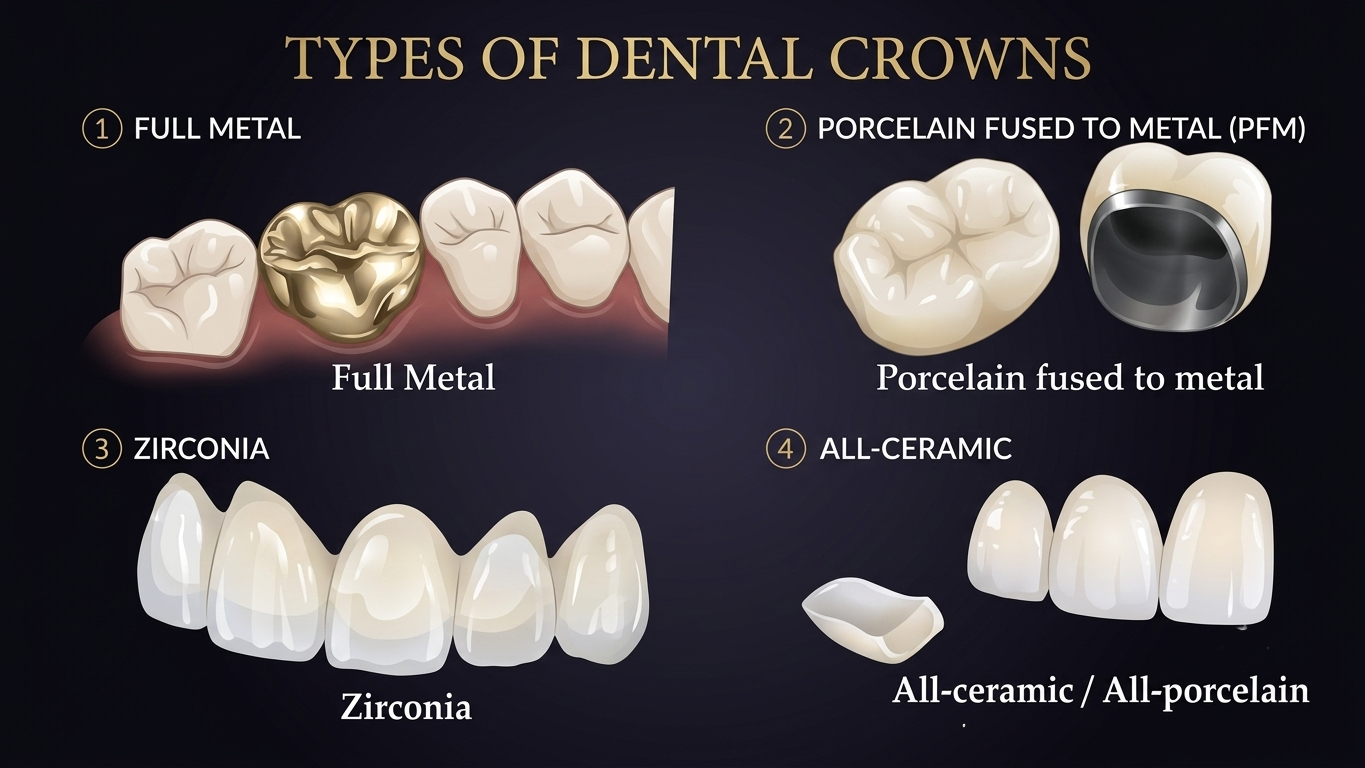
Porcelain and All-Ceramic Crowns
These are the go-to choices when looks matter most. Porcelain mimics the translucency of natural enamel beautifully, which makes it ideal for front teeth that show every time you smile. It also resists staining well. The trade-off is that it can be a little more prone to chipping under very heavy bite pressure, so it suits visible teeth more than hard-working molars.
Zirconia Crowns
Zirconia has become one of the most popular materials in modern dentistry, and for good reason. It is remarkably strong, metal-free, and kind to the body, which makes it a safe pick for anyone worried about metal sensitivity. Newer zirconia also comes in more lifelike, translucent shades, so you no longer have to choose between strength and a natural look. It works well almost anywhere in the mouth, front or back.
Porcelain-Fused-to-Metal (PFM) Crowns
PFM crowns give you a metal core for strength with a porcelain coating for appearance. For years, they were the dependable middle ground, and they still serve many patients well. Over a long time, a thin grey line can sometimes show near the gum, which is worth keeping in mind for front teeth. The porcelain layer can also chip over the years, an issue you do not get with zirconia, and fitting a PFM crown means shaping away a little more enamel during preparation.
Metal and Gold Alloy Crowns
Pure metal crowns, including gold alloys, are the toughest and longest-lasting option of all. They rarely chip and are gentle on the teeth they bite against. Their obvious downside is colour, so most people reserve them for back molars that stay out of sight. On cost, non-precious metal crowns are also quite easy on the pocket, though gold crowns sit at the higher end because of the metal itself.
Composite Resin Crowns
Resin is the most budget-friendly choice and looks reasonably natural. It wears down faster than porcelain or zirconia, though, so it is often used as a temporary measure or for teeth under a lighter load.
How to Choose the Right Crown for You
There is no single best crown, only the best crown for your situation. When we plan your restorative treatment, we weigh a few practical things together:
- Which tooth needs it: Front teeth lean towards porcelain or zirconia for looks; back molars often favour zirconia or metal for grip and strength.
- Your bite: If you grind or clench at night, a stronger material protects your investment.
- Allergies: Metal-free zirconia or all-ceramic options suit sensitive patients.
- Appearance: The more visible the tooth, the more we prioritise a natural finish.
- Budget: Materials vary in cost, and we will always talk you through the options honestly before anything begins.
The right material is the one that fits your tooth, your habits, and your life, not just a price tag.
Caring for Your Crown
Whichever type you choose, a crown lasts longest with simple, steady habits: brush twice a day, floss around it gently, avoid biting on ice or pen caps, and keep up your regular dental check-ups. Looked after well, a good crown can serve you faithfully for many years.
Let’s Find the Right Crown Together
Choosing between the types of dental crowns is far easier with a specialist looking at your actual tooth rather than a chart. At Gums and Braces in Ghatkopar East, our team helps you weigh strength, looks, and cost so you leave confident in the plan. Book a consultation with us, and we will recommend the crown that best suits your smile.
Book a consultation with us, and we will recommend the crown that best suits your smile.